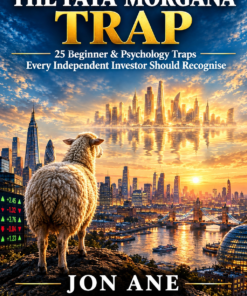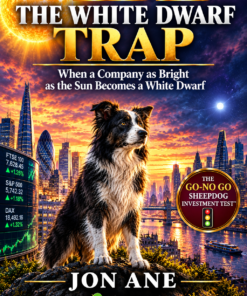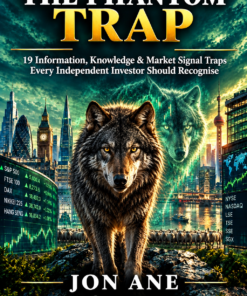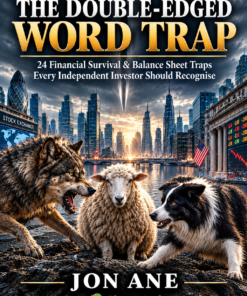
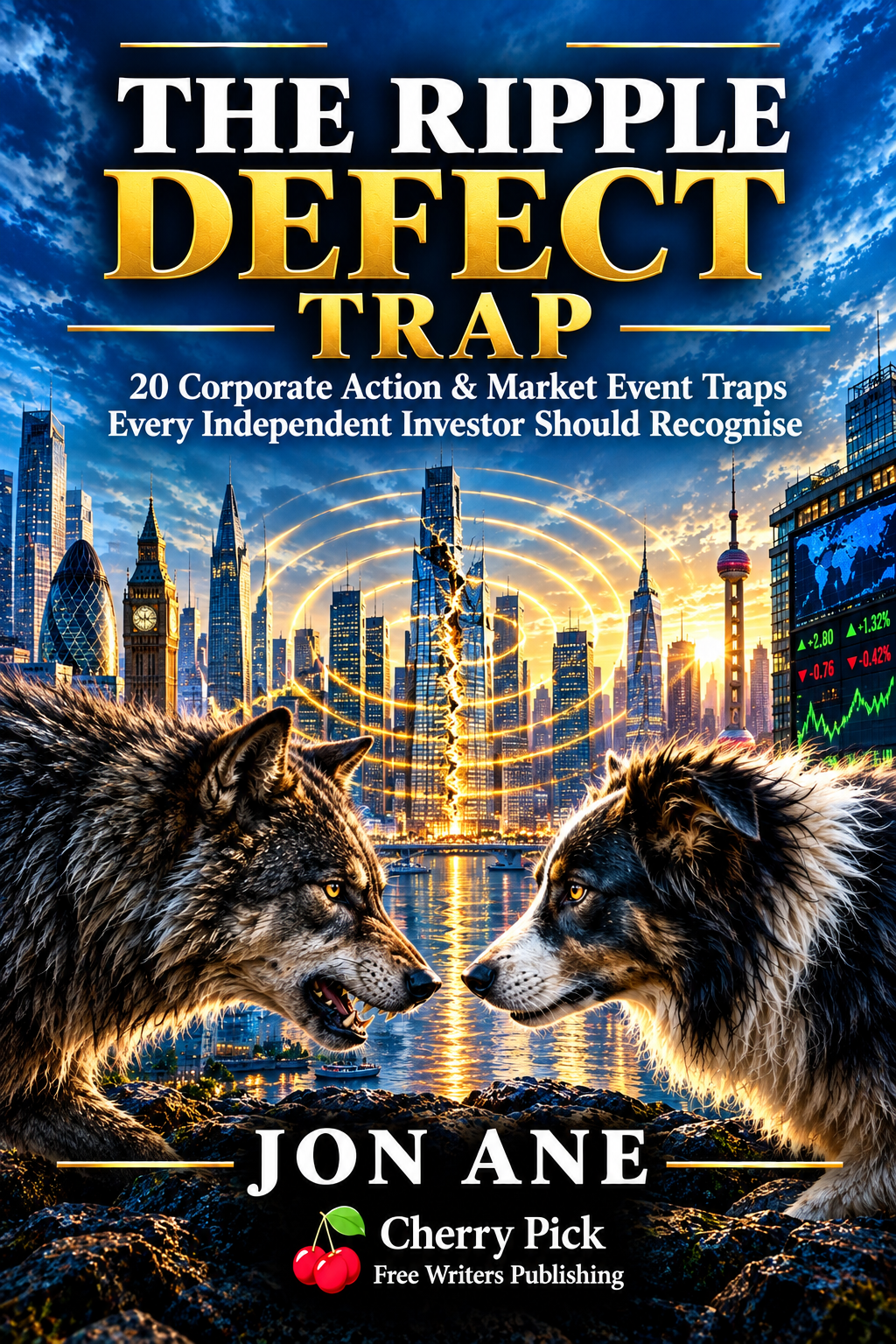
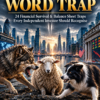
THE RIPPLE DEFECT
20 Corporate Action & Market Event Traps Every Independent Investor Should Recognise
By Jon Ane
What happens when the investment you researched is no longer the same investment?
You can spend months researching a company.
You understand its products.
Its customers.
Its competitors.
Its profits.
Its debt.
Its strategy.
You believe you understand what you own.
Then, without warning, the company announces a takeover, merger, spin-off, rights issue, tender offer or delisting.
Trading may be suspended.
New shares may be issued.
A business may be divided into two companies.
A transaction may offer what appears to be an attractive premium.
Suddenly, the investment you understood yesterday may look very different today.
This is where the next set of traps begins.
When the investment changes, your original analysis may no longer be enough.
The Investor’s Trap — Step Three takes you inside 20 corporate action and market event traps that every independent investor should recognise.
Because corporate actions are not simply announcements.
They can change the ownership, economics, risks, choices and mechanics of an investment.
A rights issue can change your ownership percentage.
An acquisition can transform a company’s debt and risk profile.
A merger can change the business you originally decided to own.
A spin-off can turn one investment into two.
A tender offer can force you to consider whether to participate.
A delisting can dramatically change how your shares can be traded.
A trading halt can temporarily remove your ability to buy or sell.
And sometimes, the most important information is buried in the terms, conditions and deadlines rather than the headline announcement.
This is why the book introduces the same three perspectives that run throughout The Investor’s Trap:
The Sheep sees the announcement.
The Wolf sees the reaction.
The Sheepdog reads the mechanics.
The Sheep sees:
“Shareholders are being offered a premium.”
The Sheepdog asks:
“What exactly am I receiving, what am I giving up, and what happens if I do nothing?”
That difference can be enormous.
Corporate actions often arrive wrapped in reassuring language:
Premium.
Value creation.
Strategic combination.
Simplification.
Shareholder opportunity.
Those descriptions may be perfectly legitimate.
But the independent investor still needs to look underneath the headline.
What exactly is changing?
What do I receive?
What do I give up?
What happens to my ownership?
What happens if I participate?
What happens if I do nothing?
What happens if the transaction fails?
What are the critical dates?
Who controls the next decision?
These are not academic questions.
They can determine what your investment becomes.
The headline is only the beginning.
A corporate action can create an opportunity.
It can also create dilution, uncertainty, complexity, forced decisions or unexpected consequences.
And the more complicated the announcement becomes, the easier it can be to assume that someone else has already understood it.
That is precisely where an independent investor needs to slow down.
Step Three teaches you to move beyond the announcement and examine the mechanics of what is actually happening.
You will explore mergers, acquisitions, spin-offs, rights issues, tender offers, delistings, trading halts, forced sales, corporate-action deadlines and transaction terms.
You will learn to look beyond the headline and ask the questions that matter to your investment.
Because a company can change without you making a new investment decision.
And when that happens, your original investment thesis may need to be questioned.
This is the crucial connection between the first three steps:
Step One: Understand yourself.
Step Two: Understand the information influencing you.
Step Three: Understand what happens when the investment itself changes.
The goal is not to tell you whether a corporate action is good or bad.
The goal is to help you understand what has changed before deciding what that change means.
Because sometimes the most important moment in an investment is not when you decide to buy.
It is the moment when the investment you bought stops being what you originally bought.
The Sheep sees the announcement.
The Wolf sees the reaction.
The Sheepdog reads the mechanics.
Learn to recognise the difference.
Because when the investment changes, your thinking must change with it.