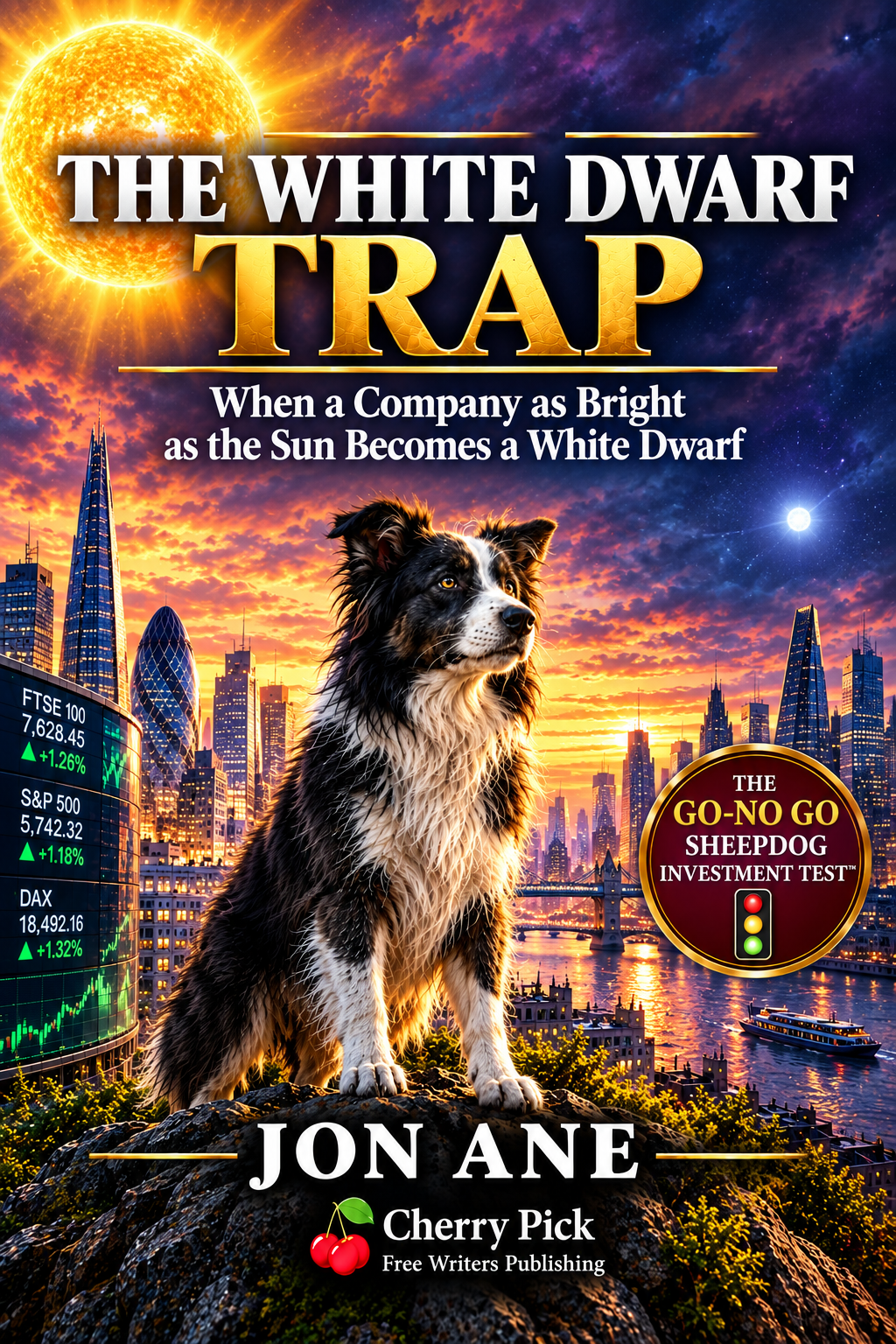
THE WHITE DWARF TRAP
WHEN A COMPANY AS BRIGHT AS THE SUN BECOMES A WHITE DWARF By Jon Ane
20 Operations, Customer, Competitive Dependency, Decision, Time & Variation Traps Every Independent Investor Should Recognise — Plus the Ultimate Trap
By Jon Ane
What if the biggest risk in a business is not visible in its financial statements?
You can understand the investor.
You can understand the information.
You can understand the corporate action.
You can understand the balance sheet.
And still miss one of the most important questions:
How does this business actually work?
That is where The Investor’s Trap — Step Five takes you.
The final step moves inside the business itself.
Because a company is not simply a share price.
It is not just a set of accounts.
And it is not merely a corporate structure.
It is a living operating system made up of people, customers, suppliers, processes, competitors, decisions, dependencies, time and events.
And every connection can create a trap.
A company may appear successful while depending heavily on one major customer.
A profitable business may rely on a single critical supplier.
A small operational problem may spread through the organisation.
A competitor may change the economics of an entire market.
A management decision made today may create consequences years later.
A delay that looks insignificant may change the outcome of an otherwise successful plan.
And a business that performs perfectly under normal conditions may become surprisingly vulnerable when circumstances change.
The danger may not be the average.
It may be the variation around the average.
Customers do not always buy the average amount.
Costs do not always remain average.
Delivery times vary.
Demand varies.
Margins vary.
Competition varies.
Performance varies.
The investor who studies only averages can overlook the extremes that create the real risk.
This is why Step Five asks questions that go beyond the traditional financial analysis:
What does this business actually depend on?
Who does it depend on?
What happens if a major customer disappears?
What happens if a critical supplier fails?
What happens when competition changes?
What happens when management makes the wrong decision?
What happens when something takes longer than expected?
And perhaps most importantly:
What happens when several small problems occur at the same time?
This is where the familiar framework returns:
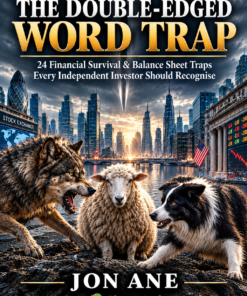
The Sheep sees the business as it appears today.
The Wolf looks for dependency, weakness and predictable reactions.
The Sheepdog looks for the connections.
Because businesses do not operate as isolated pieces.
They operate as systems.
A customer problem can become an operational problem.
An operational problem can become a financial problem.
A financial problem can change management decisions.
A management decision can affect customers.
And the cycle can continue.
One problem can create another.
That is the deeper risk.
Step Five therefore teaches the investor to look beyond individual risks and examine the relationships between them.
A customer dependency may look manageable.
A supplier dependency may look manageable.
A staffing problem may look manageable.
A delay may look manageable.
A margin decline may look manageable.
But what happens when they interact?
That is where the apparently ordinary can become dangerous.
And this is where the series reaches the Ultimate Trap.
The Ultimate Trap is not necessarily a dramatic event.
It is failing to recognise the connection between events that appear unrelated.
An investor may analyse the company.
Then analyse the numbers.
Then read the news.
Then watch the share price.
Everything may appear understandable when examined separately.
But the real risk may be hiding in the connection between them.
This is why Step Five treats the company as a system rather than a static object.
Operations create dependencies.
Dependencies create vulnerabilities.
Decisions create consequences.
Time changes circumstances.
Variation exposes weaknesses that averages can conceal.
And unexpected events can move through the system in ways that are difficult to see until they become obvious.
The first four steps prepared you for this point:
Step One: Understand yourself.
Step Two: Understand the information influencing you.
Step Three: Understand what happens when the investment changes.
Step Four: Understand the financial structure supporting the business.
Step Five: Understand how the business actually works.
This final step does not promise to eliminate uncertainty.
It teaches you to look at uncertainty differently.
You cannot predict every customer decision.
You cannot predict every supplier failure.
You cannot predict every management mistake.
You cannot predict every competitor’s move.
And you cannot eliminate variation.
But you can learn to recognise dependencies, connections, consequences and vulnerabilities before they become obvious.
The final Sheep Test™ therefore asks more than:
“What could go wrong?”
It asks:
“What could connect one problem to another?”
That question can change the way you analyse a business.
Because the greatest risk may not be the problem you can see.
It may be the second problem created by the first.
And then the third.
The Sheep sees the business.
The Wolf sees the weaknesses.
The Sheepdog sees the connections.
The Investor’s Trap — Step Five brings the series inside the machinery of the business—and exposes the traps that can emerge when everything is connected.
Look beyond the numbers.
Look beyond the headline.
Look beyond the average.
Look for what happens when one thing changes—and everything else has to respond.