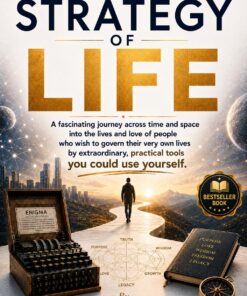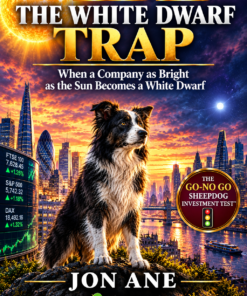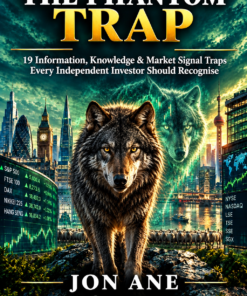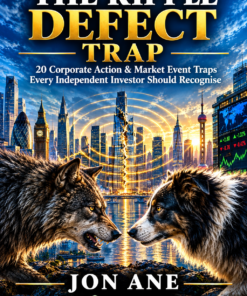
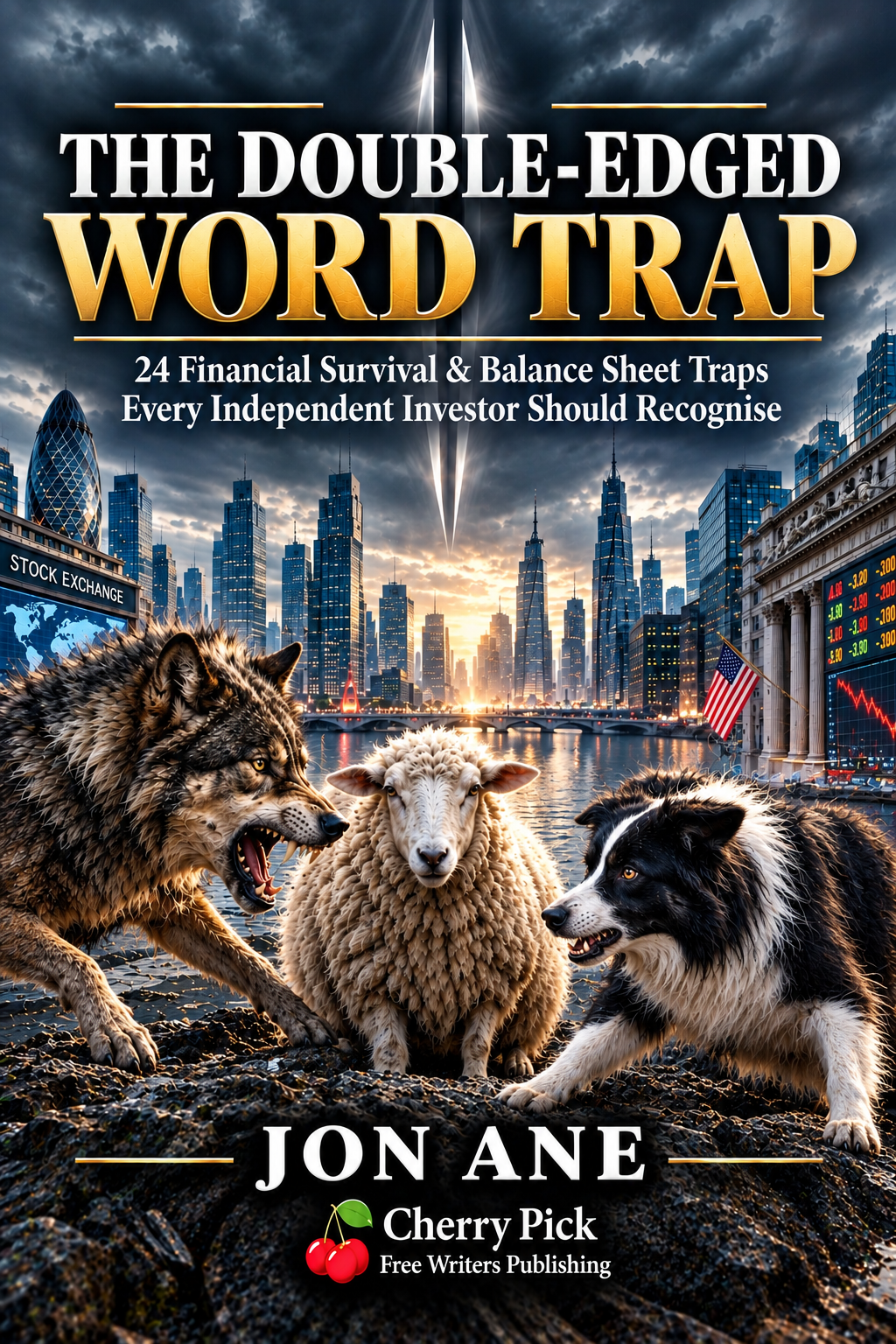
THE DOUBLE-EDGED WORD TRAP
24 Financial Survival & Balance Sheet Traps Every Independent Investor Should Recognise
By Jon Ane
A profitable company can still run out of money.
A company can have a famous brand.
Excellent products.
Growing revenue.
Loyal customers.
An exciting strategy.
And impressive profits.
Yet beneath the surface, the financial structure can be weakening.
Debt can be growing.
Cash can be disappearing.
Margins can be shrinking.
Working capital can be consuming more money.
Interest obligations can be increasing.
And the business can become increasingly dependent on conditions remaining favourable.
This is where the next set of investment traps begins.
Because profit is not the same as financial strength.
The Investor’s Trap — Step Four takes you inside 24 financial survival and balance sheet traps that every independent investor should recognise.
This book goes beyond the headline numbers and examines the financial foundations that determine whether a business can survive, finance itself and create value.
The central question is no longer simply:
“Is this company making money?”
It becomes:
“Can this company continue to survive when conditions become worse?”
That is a much harder question.
A company can report a profit while cash is under pressure.
Revenue can increase while margins deteriorate.
Debt can appear manageable until interest rates rise.
A company can own valuable assets and still face a liquidity problem.
Cash may look substantial until you consider how much the business needs to spend.
And accounting profit can sometimes create an appearance of strength that is very different from the underlying economic reality.
This is why Step Four focuses on financial survival, not simply financial performance.
The book examines:
Cash.
Liquidity.
Debt.
Leverage.
Interest obligations.
Working capital.
Margins.
Earnings quality.
Assets and liabilities.
Refinancing.
Capital requirements.
Cash generation.
And, critically, the relationship between profit and cash.
Because the numbers only become meaningful when you understand how they interact.
The Sheep sees the headline figure.
The Wolf looks for financial weakness.
The Sheepdog asks:
“What happens when conditions become worse?”
What happens if sales fall?
What happens if margins contract?
What happens if customers pay later?
What happens if interest rates rise?
What happens when debt needs to be refinanced?
What happens if the company needs additional capital?
What happens if the business cannot generate enough cash internally?
These questions can reveal weaknesses that headline earnings may conceal.
A balance sheet is not just a collection of accounting figures.
It is a snapshot of the resources, obligations and financial pressures surrounding a business.
And those pressures matter.
Profit tells you something.
But cash tells you something different.
Debt tells you something.
But the ability to service that debt tells you something more.
Revenue growth may look impressive.
But what happens to margins as the business grows?
Cash on the balance sheet may look reassuring.
But how much of that cash can the business actually afford to use?
Step Four teaches you to stop looking at financial figures as isolated numbers and start seeing them as a connected financial system.
Instead of simply asking:
“How much profit?”
you learn to ask:
“How was that profit created?”
Instead of:
“How much cash?”
you ask:
“How much cash does this business actually need?”
Instead of:
“How much debt?”
you ask:
“Can the business carry that debt when conditions become less favourable?”
And ultimately:
“What happens if my assumptions are wrong?”
That final question may be one of the most important questions an investor can ask.
Because businesses rarely move directly from financial strength to collapse.
The warning signs can appear much earlier.
Margins can weaken.
Cash conversion can deteriorate.
Working capital can absorb increasing amounts of cash.
Debt can become more burdensome.
Refinancing can become more difficult.
And financial flexibility can disappear—often before the crisis becomes obvious.
That is why The Investor’s Trap — Step Four is not simply a book about reading accounts.
It is about learning to recognise financial pressure before it becomes a financial crisis.
Step One taught you to understand yourself.
Step Two taught you to question the information influencing you.
Step Three taught you to understand what happens when the investment changes.
Step Four goes deeper.
It asks whether the business itself has the financial strength to survive.
Because a company does not have to go bankrupt for an investment to go badly.
The deterioration can begin long before the headline announces a crisis.
The Sheep sees the headline figure.
The Wolf looks for financial weakness.
The Sheepdog examines the financial structure.
Learn to see what the headline numbers may not reveal.
Because the real question is not simply whether a company is profitable today.
It is whether the business can survive long enough to make tomorrow’s profits.